
Aligning Science Across Parkinson's Logo Text

Karel Svoboda, PhD

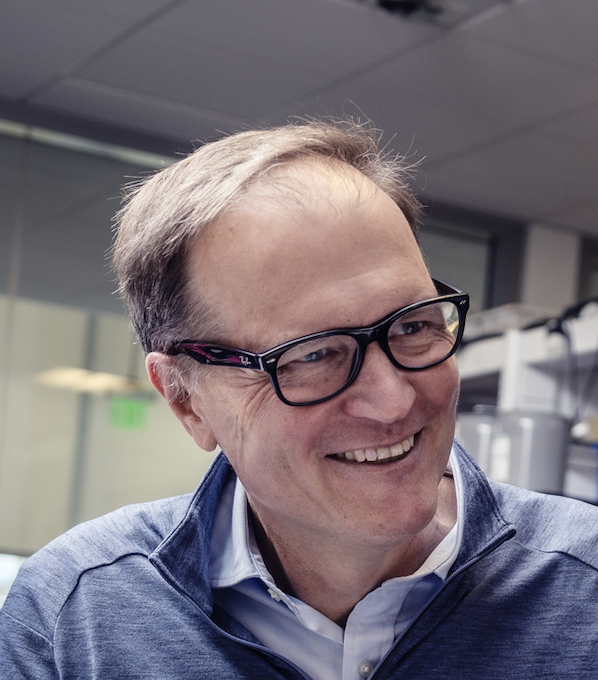
Karel Svoboda is the director of the Allen Institute for Neural Dynamics. Before joining the Allen Institute, he was a senior group leader at HHMI’s Janelia Research Campus. Svoboda’s work is at the intersection of neuronal biophysics and cognition. His goal is to identify core principles underlying information processing in mammalian neural circuits at the level of the whole brain. Svoboda has developed widely-used methods to interrogate neural structure and function in intact brains. Notable contributions include microscopy methods to image synapses over times of weeks in the intact brain during learning; engineered sensitive fluorescent protein sensors for imaging of neural activity; microscopes with very large fields of view that enable imaging multiple brain regions with single neuron resolution. Svoboda is an advocate for open and reproducible science.

Svoboda was born in Prague, then part of Czechoslovakia, and grew up in West Germany. He graduated from Cornell University with a BA in Physics (1988) and from Harvard University with a PhD in Biophysics (1994). He was a member of technical staff at Bell Laboratories (until 1997) and a principal investigator at Cold Spring Harbor Laboratory (until 2006). Svoboda was awarded the Society for Neuroscience Young Investigator Award (2004) and the Brain Prize from the Lundbeck Foundation (2015). He is a member of the National Academy of Sciences (USA).

Allen Institute for Neural Dynamics |

Karel Svoboda, PhD

Allen Institute for Neural Dynamics

Karel Svoboda is the director of the Allen Institute for Neural Dynamics. Before joining the Allen Institute, he was a senior group leader at HHMI’s Janelia Research Campus. Svoboda’s work is at the intersection of neuronal biophysics and cognition. His goal is to identify core principles underlying information processing in mammalian neural circuits at the level of the whole brain. Svoboda has developed widely-used methods to interrogate neural structure and function in intact brains. Notable contributions include microscopy methods to image synapses over times of weeks in the intact brain during learning; engineered sensitive fluorescent protein sensors for imaging of neural activity; microscopes with very large fields of view that enable imaging multiple brain regions with single neuron resolution. Svoboda is an advocate for open and reproducible science.

Svoboda was born in Prague, then part of Czechoslovakia, and grew up in West Germany. He graduated from Cornell University with a BA in Physics (1988) and from Harvard University with a PhD in Biophysics (1994). He was a member of technical staff at Bell Laboratories (until 1997) and a principal investigator at Cold Spring Harbor Laboratory (until 2006). Svoboda was awarded the Society for Neuroscience Young Investigator Award (2004) and the Brain Prize from the Lundbeck Foundation (2015). He is a member of the National Academy of Sciences (USA).

Aligning Science Across Parkinson's
Privacy Overview

This website uses cookies so that we can provide you with the best user experience possible. Cookie information is stored in your browser and performs functions such as recognising you when you return to our website and helping our team to understand which sections of the website you find most interesting and useful.