

Our Approach to Data Sharing
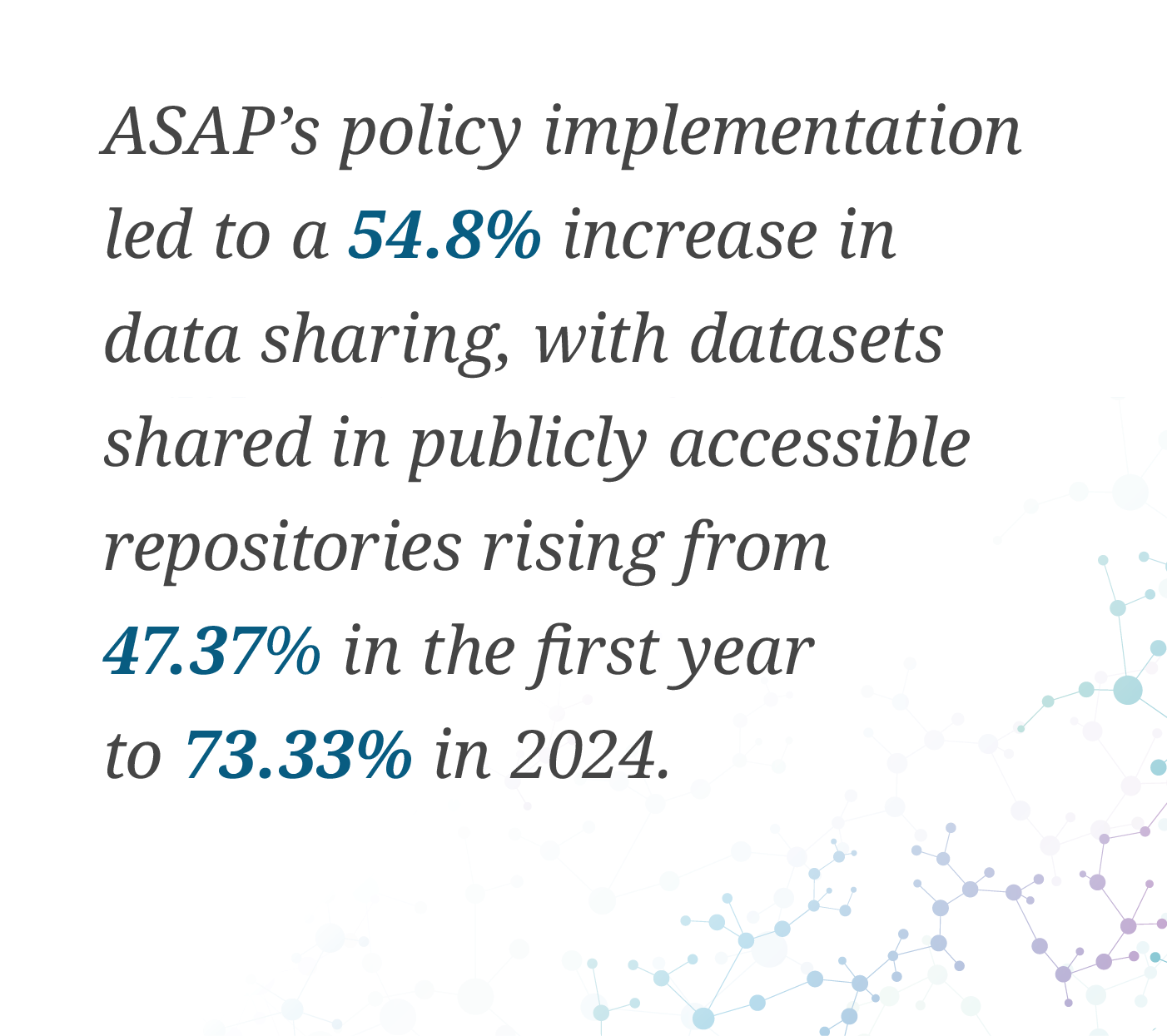
ASAP requires grantees to share datasets and associated metadata in a publicly accessible repository by the time of publication to improve the persistence, discoverability, and reusability of datasets. An assessment of sharing datasets in ASAP-funded publications showed that the policy’s implementation resulted in an increase in data sharing at the time of publication.
ASAP CRN Cloud
In 2024, we launched the CRN Cloud, a data-sharing tool containing a unique dataset of human postmortem-derived brain samples that are available to the entire research community. There is a consistent cadence of new data releases, with over 600 donors contributing to the final harmonized dataset, along with other human and non-human datasets. The tool was developed in collaboration with The Michael J. Fox Foundation, Verily, DNAstack, and DataTecnica. Researchers who are interested in accessing the data should visit the CRN Cloud and submit a Data Use Application from within the platform.
GP2 Cohort Dashboard
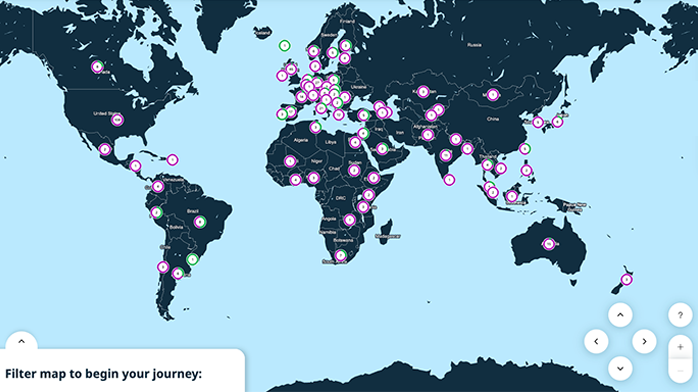
GP2’s mission is to further understand the genetic architecture of Parkinson’s disease through genotyping diverse participant groups and studying highly suspected monogenic forms of Parkinson’s. In support of this mission, we continue to collect diverse cohorts from around the world through collaboration and openly sharing data, processes, and results. Explore the dashboard to understand our milestones achieved so far, and continue to visit this page as data will be updated monthly.
Parkinson’s Precision Medicine Initiative (PPMI) Datasets
PPMI has created a comprehensive, uniformly acquired dataset and biosample repository available to the Parkinson’s disease research community. PPMI offers the opportunity to expand and transform the use of a global biorepository, helping define Parkinson’s by biology, identify it earlier, and build more targeted approaches to treatment, including clinical trials targeting synuclein, LRRK2, GBA, and other targets.
Availability and analysis of these data and samples serve to:
- Identify biomarkers of Parkinson’s progression to accelerate therapeutics to slow Parkinson’s disease disability
- Develop quantitative measures that demonstrate optimum interval change from prodromal Parkinson’s disease to diagnosis
- Demonstrate preferred study methodology to allow cross-study comparison

AMP® PDRD Datasets
The Accelerating Medicine Partnership in Parkinson’s Disease and Related Disorders (AMP® PDRD) is a public-private partnership between the NIH and multiple organizations, including ASAP, to harmonize Parkinson’s disease datasets across the community with the goal of identifying and validating diagnostic, prognostic, and/or progression biomarkers for Parkinson’s, with an emphasis on broadening data sharing in the biomedical community to advance Parkinson’s disease research. In 2024, AMP® PDRD expanded its scope to also include Parkinson's Disease Related Disorders. AMP® PDRD utilizes well-characterized cohorts with existing biosamples and clinical data that were collected under comparable protocols and using common data elements.

Datasets in the ASAP Catalog
Our initiative is accelerating the pace of discovery for Parkinson’s disease through collaboration, research-enabling resources, and data sharing. Browse our Catalog to view all ASAP-supported datasets.
