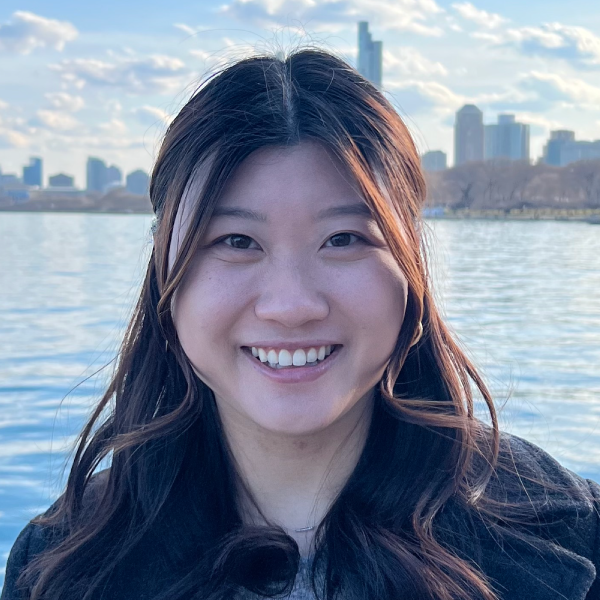
Claire Chiang
PhD student, Pfeffer Lab
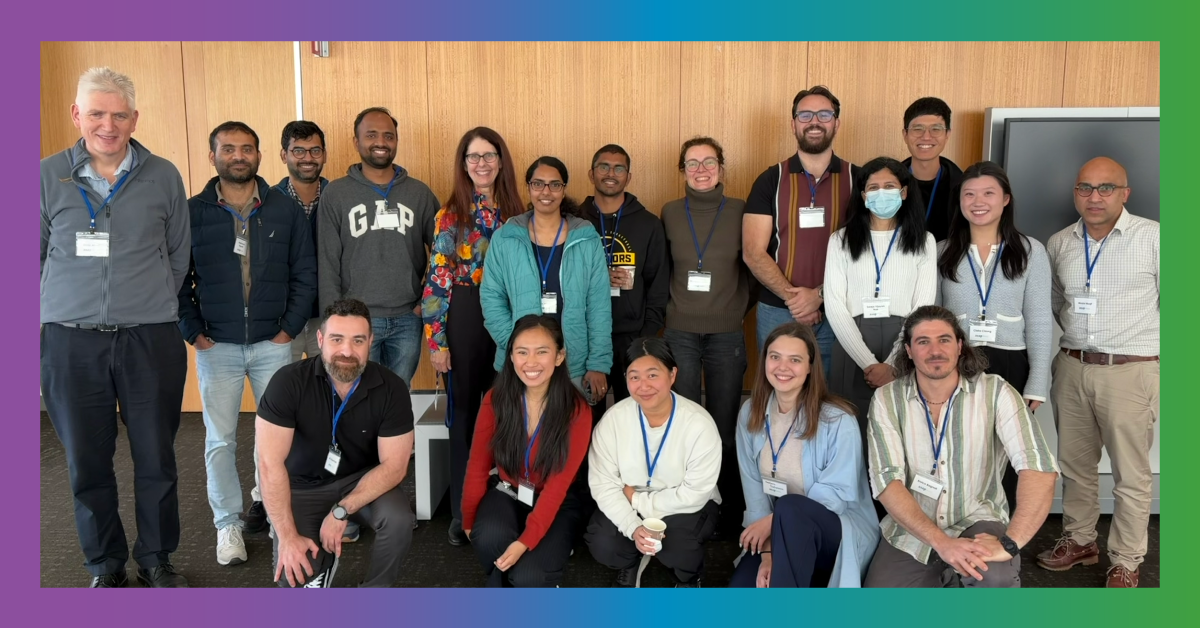
As a PhD student in Suzanne’s lab, I’ve had the pleasure of attending each Cell Biology of Parkinson’s Disease conference. Our daily scientific work is intricately related to the molecular mechanisms and cell biology pathways underlying Parkinson’s disease. To me, this conference is the highlight of the year, as it brings together the innovators and trailblazers in this space. Reading papers and participating in virtual meetings all year is no match for the fulfillment of meeting those authors and speakers face-to-face at a conference and seeing them present live.
The conference’s networking breaks also allow us trainees to engage investigators and other trainees in deep scientific discussions on our current projects. I always appreciate the willingness of PIs to take the time to discuss their work and my project with me, despite the short, one-day timeframe. These discussions lead to new insights, such as new experimental techniques, data interpretation, or alternative approaches to the questions we are constantly working to answer.
Although Team Alessi meets on Zoom every other week, trainees rarely interact with each other in person. The Cell Biology of Parkinson’s Disease conference is also an opportunity for Alessi lab members to come to Stanford, see our campus and lab space, and exchange experimental ideas and techniques. In-person opportunities allow for my fluid and fruitful discussion and hands-on demonstrations and discussions of lab techniques. But the collaboration isn’t limited to California!
This past July, I was able to spend a full week at the University of Dundee to experience life in the Alessi lab. I performed binding assays to construct a platform to measure LRRK2 inhibitor binding, purified LRRK2 protein on a large scale, and attended seminars and thesis defenses.
I have formed lasting relationships with my collaborators through this exchange, providing me with another source of scientific mentors who provide knowledge and experience for my future projects and experiments. I am very grateful to Dr. Dario Alessi and his lab members, particularly PhD student Sadik Elshani, for their extreme generosity.
I have seen firsthand that collaboration is a key component of successful research. Even a short discussion with such talented collaborators can be sufficient to provoke a new experimental idea or open my eyes to the solution to a previously impenetrable problem. With support from ASAP, this conference has fostered many such discussions and generated new ideas throughout my PhD, and I look forward to continuing my contributions to this field with this supportive community.
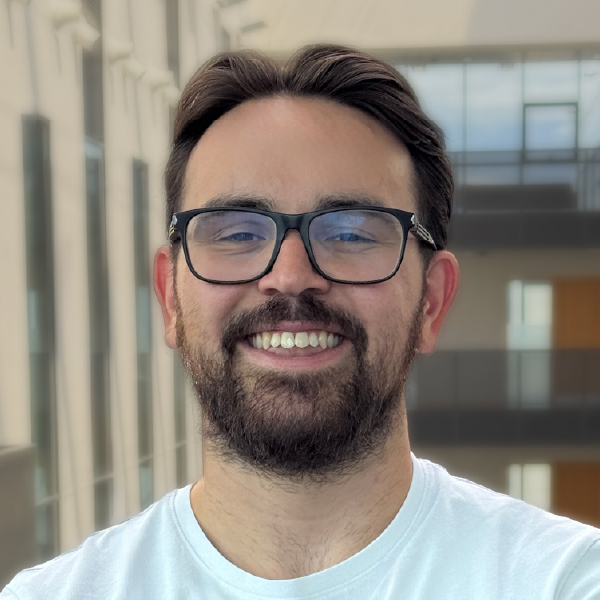
Sadik Elshani
PhD student, Alessi Lab
The ASAP Cell Biology Meeting was a concentrated, one-day event, but it offered an incredibly broad view of current Parkinson’s disease research. As an early-stage PhD student, I did not fully know what to expect, but I was struck by both the depth and diversity of work being carried out across the field. Even within this relatively focused area, I was particularly impressed by the application of mass spectrometry in proteomics and metabolomics across the world, from Germany and the UK to the United States.
This breadth helped me better understand where my own project fits within the wider landscape and gave me a new appreciation of how interconnected the LRRK2 field is. Hearing leading researchers share their work, challenges, and future directions highlighted the scale of ongoing efforts in this space.
The meeting also provided valuable opportunities to discuss my own ideas and receive thoughtful feedback. For example, discussions around experimental approaches encouraged me to refine how I design and interpret my assays, including considering alternative protocols and reagents I had not previously explored. This has influenced how I approach my project since the visit, helping me to view it from a different perspective. This exchange of ideas is exactly what ASAP aims to foster, and being able to engage in this environment so early in my scientific career was incredibly meaningful. Alongside the meeting, I had the opportunity to spend two weeks in Professor Suzanne Pfeffer’s lab at Stanford, where I was trained in expansion microscopy (ExM). This was a particularly valuable experience, as it allowed me to develop technical skills that I would not otherwise have had access to. I was taught both the core steps of ExM and best practices for image acquisition and analysis, gaining hands-on experience with a technique that will be directly relevant to my future work.
Rishith Ravindran, a postdoctoral researcher in the lab, was instrumental in guiding me through the ExM workflow. His patience and expertise made a complex technique feel approachable. I was also supported by Claire Chiang, a PhD student in the Pfeffer lab, who was extremely generous with her time and helped me make the most of my visit. Professor Suzanne Pfeffer was incredibly welcoming, and observing the quality and consistency of the work produced in her lab on a daily basis was highly motivating.
One of the most memorable moments of my visit was meeting Professor Randy Schekman. Our conversation about his work, career, and scientific curiosity was eye-opening. It encouraged me to think more broadly about my future and reinforced the importance of working in environments that value openness, collaboration, and ambition. It also made me more confident in pursuing a research career that combines technical innovation with collaborative science.
Overall, this experience reflects exactly what ASAP aims to achieve. I was able to exchange ideas, gain new perspectives on my research, and learn a technique that I am excited to bring back to Dundee and apply within my own project. It has given me a renewed sense of motivation and a clearer understanding of what is possible moving forward in my PhD and beyond.