
Our Year in Review: Insights, outcomes, and highlights that shaped 2025. Read the full report!
Aligning Science Across Parkinson's Logo Text

Collaborative Research Network

The ASAP Collaborative Research Network (CRN), which launched in 2020, is the first of its kind to foster an environment that facilitates the rapid and free exchange of scientific ideas to spark new discoveries for Parkinson’s disease.


The CRN utilizes open science principles to accelerate discoveries and improve outcomes, foster collaborations, generate resources, and share data assets within a global research network.

We designed the program to encourage diverse perspectives and open discourse to support high-risk, ambitious projects, reshaping how science in the Parkinson’s field is conducted; and reinvigorate the research pipeline to identify new targets and pathways for translational studies and commercialization.

Highlights

Since 2020, the CRN has brought together more than 160 investigators across international teams in 14 countries, organized into 35 research teams. Check out a few of the highlights resulting from this network. 
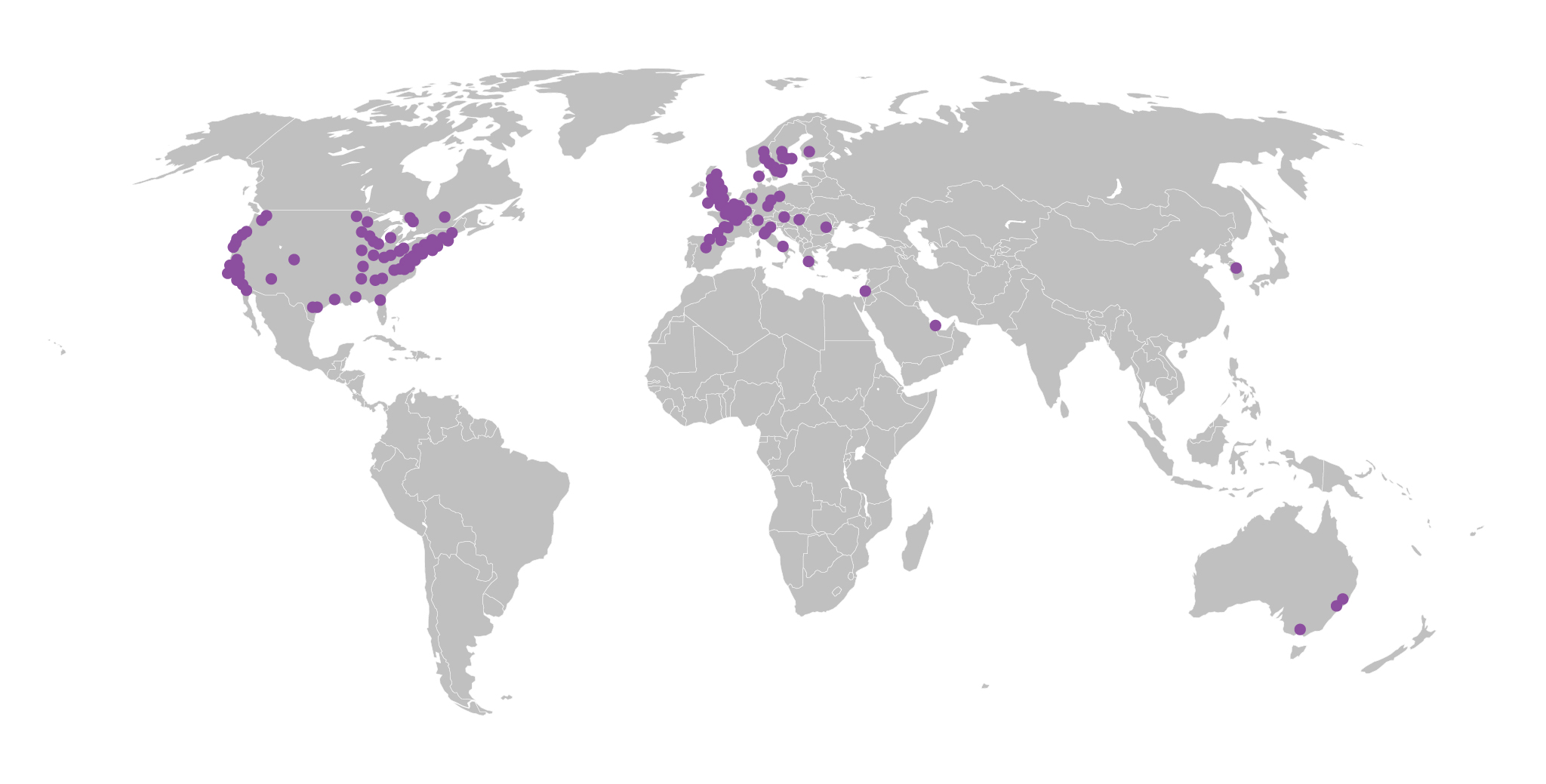
CRN Around the Globe

The CRN brings together a diverse, international community of multidisciplinary teams made of over 200 investigators and trainees from leading academic and research institutions. Our community is a driving force behind ASAP’s mission to accelerate the pace of discovery in Parkinson’s disease through team-based, open, and multidisciplinary science.
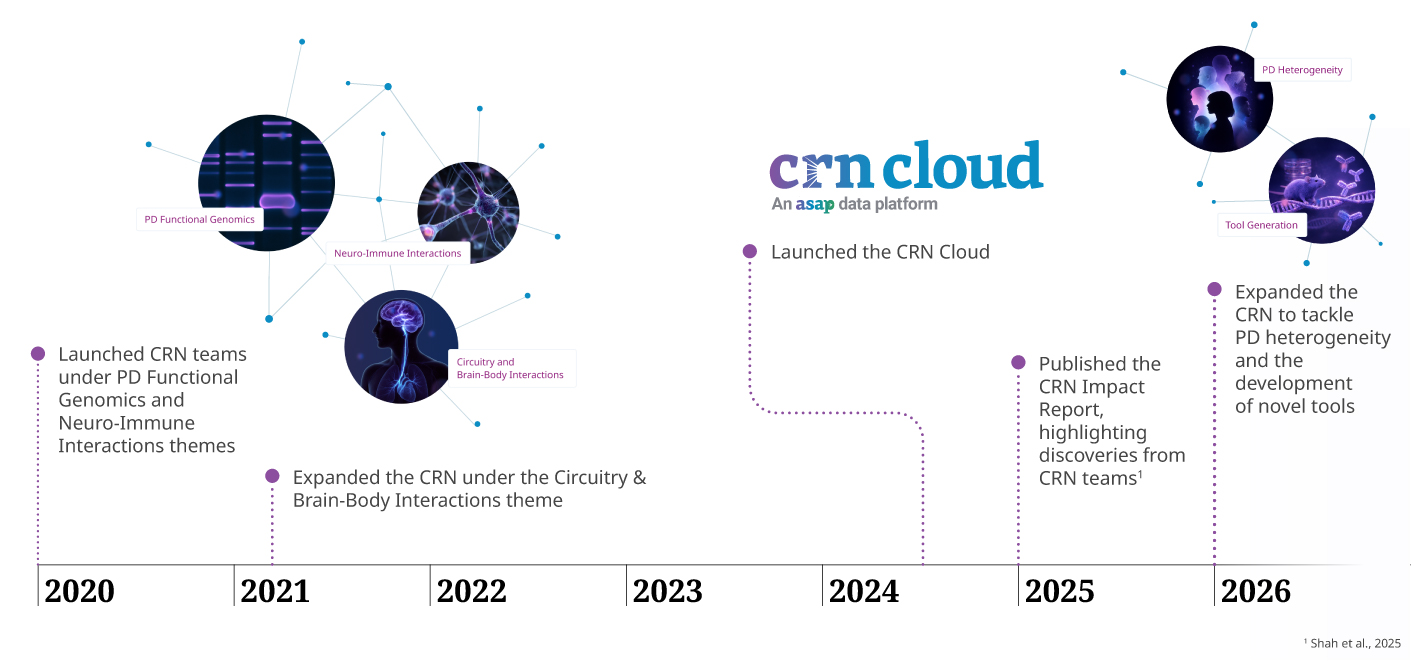
The CRN Journey

View the timeline below for a high level overview of select CRN milestones.

CRN Outputs in the ASAP Catalog

The CRN has developed tools and research outputs that the scientific community can utilize to support research endeavors. To learn more about CRN outputs, visit the ASAP Catalog, which lists the publicly available, ASAP-funded research outputs produced through the ASAP initiative.

Aligning Science Across Parkinson's
Privacy Overview

This website uses cookies so that we can provide you with the best user experience possible. Cookie information is stored in your browser and performs functions such as recognising you when you return to our website and helping our team to understand which sections of the website you find most interesting and useful.