
Voices From the Network: How Open Science Practices Are Driving Research Forward
Madeline Klinger, PhD, Associate Program Officer at Aligning Science Across Parkinson’s and Coalition for Aligning Science
Published September 16, 2026
In celebration of Open Science Week, Aligning Science Across Parkinson’s (ASAP) is reflecting on how open science practices are transforming research across our initiative. For ASAP, engaging in open science practices is more than a policy requirement. With more than 3,000 openly available research outputs and ASAP preprints available 9 months before journal publications, open science is central to how we cultivate a community that values scientific collaboration and information sharing to accelerate the pace of scientific discovery and innovation.
Parkinson’s disease (PD) is extraordinarily complex. We aim to accelerate discoveries in Parkinson’s research by fostering collaboration among institutions and enabling researchers across disciplines to share data, tools, methods, and findings. Through our Open Science Policy, we work to make those research outputs available by the time a study is preprinted, making them easier for others to access, reuse, and build upon.
We asked researchers across ASAP programs how these practices are advancing their work. Their responses show what open science engagement looks like in practice, from sharing findings earlier to pooling data across populations and accelerating translation.
Supporting Access, Building Discoveries
By enabling access to tools, datasets, and articles, ASAP-funded researchers are ensuring that the global scientific community can continue to build upon findings.
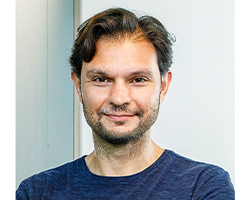
“There are many students, researchers, and biotech firms who find themselves blocked by journal paywalls. Thanks to open access, our work has been highlighted and cited far more widely… Cumulatively, we gain years of progress through open collaboration.” — Erinc Hallacli, PhD, CRN Team Krichevsky
“Access to shared datasets, protocols, and analytical tools has improved both the quality and efficiency of our research. Building on established resources helps refine our questions, validate findings, and focus our efforts on generating new insights instead of recreating existing work.” — Akira Fushiki, PhD, CRN Team Surmeier

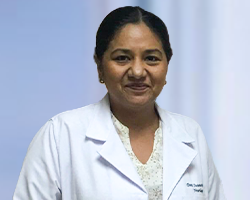
“Open science promotes faster validation of discoveries, diverse population studies, and cross-disciplinary collaboration… It has allowed our team to contribute meaningful evidence on Parkinson’s in an underrepresented Latin American population.” — Susana Peña, MD, LARGE-PD
“I was delighted to contribute to the development of Sniffles2. [By applying open source licensing, this] long-read DNA analysis tool that can now detect somatic structural variants… has been widely embraced by the scientific community in areas well beyond Parkinson’s and neuroscience.” — Christos Proukakis, PhD, CRN Team Voet and Multi-Omics Meta-Analysis (MoMa) grantee

Building Momentum for Parkinson’s Research
Open science practices are only as powerful as the community that leverages them. Across the ASAP network, researchers are showing how sharing data, methods, tools, and findings can reduce duplication, spark new collaborations, and help discoveries move forward faster.
As we celebrate Open Science Week, ASAP remains committed to building a research environment where knowledge and resources can move freely across teams and disciplines, helping the Parkinson’s research community build on one another’s progress and ultimately deliver better outcomes for people with Parkinson’s.
-
 View Story
Parkinson's Research Funders Lead the Way With Progressive Open Access and Open Science Policies
SPARC dives into how Aligning Science Across Parkinson's (ASAP) and The Michael J. Fox Foundation (MJFF) are advancing Parkinson's research through open-access and open-science policies that mandate the early, public sharing of publications, data,…
August 19, 2026 -
 Read More
ASAP Research Round-Up | Q2 2026
In this Q2 2026 edition of the ASAP Research Round-Up, we highlight how our programs produced resources for the scientific community, supported venues that facilitate collaboration, and provided new opportunities for researchers to accelerate…
July 27, 2026 -
 View Story
Investing in Open Science: Key Considerations for Funders
ASAP program officer, Dana Lewis, PhD, joins Preprints in Motion to discuss our open science preprint that covers costs associated with open science policies from a funder's perspective.
March 5, 2025
