


The Global Parkinson’s Genetics Program (GP2) continues to assess the genetic background of PD across diverse global populations. Analysis of known PD-related genes continues to reveal specific risk variants present within specific populations, indicating that, at the genetic level, PD is not one-size-fits-all.
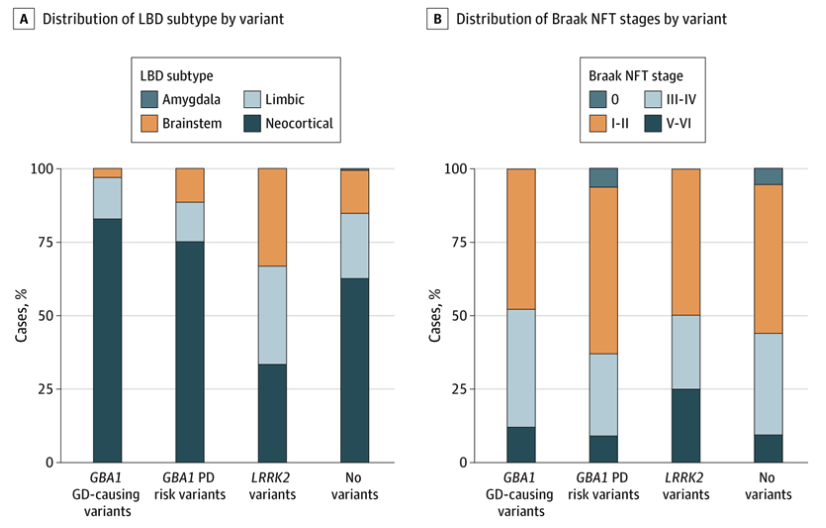
- A large multicenter, cross-sectional study analyzed data from 3,353 brain donors to investigate the relationships between clinical diagnoses, underlying neuropathology, and genetics in neurodegenerative movement disorders. The study highlights that clinical misdiagnosis is common and emphasizes the value of integrating genetic and pathological data to improve diagnostic accuracy, which can better support biologically informed diagnostic tools. In addition, genetic variation was associated with distinct pathological differences; for example, carriers of the GBA1 variants showed a greater Lewy body burden, while LRRK2 pathogenic variant carriers had a lower Lewy body burden and longer survival. (GP2 | View Publication)
- The first large-scale Taiwan-wide PD Genome-Wide Association Study (GWAS) identified distinct genetic signatures in the SNCA and LRRK2 genes. Notably, regional haplotype analyses revealed that the primary SNCA risk signal is situated on a haplotype enriched in East Asian populations, distinct from the canonical European configuration. In addition, a gene-dosage effect for the LRRK2 risk variants was identified, indicating that carrying two risk variants confers a significantly higher risk than carrying a single variant. (GP2 | View Publication)

- A GWAS of people with PD who experienced symptom onset between ages 18 and 40 revealed potentially distinct genetic risk factors. The work indicates that a subset of young-onset PD is likely a unique form of the disease that may be influenced by recessive variants, which require an individual to inherit two copies of the gene. Together, these findings highlight the need for continued research on how genetic risk may vary in young-onset Parkinson’s. (GP2 | View Preprint)

While PD was once viewed solely as a neuronal disease, recent breakthroughs highlight the critical role of diverse brain cells and their complex interactions with neurons.
- A recent CRN paper suggests that mechanisms of PD extend far beyond neuronal dysfunction. Here, researchers assessed how genetic variation affects how specific genes are expressed in the brain and showed that genetic risk converges on a common network, known as the vesiculopathy network, across neuronal and glial cells. This network controls the internal processing and disposal of waste. The results indicate that gene expression in non-neuronal cells may be an important factor in disease and suggest that rather than using a one-size-fits-all therapy to treat PD, researchers can target networks in specific cell types. (Team Scherzer | View Preprint)

- Astrocytes are essential for maintaining a healthy brain environment. When mitochondria become damaged, they are typically removed via a quality control pathway involving PINK1 and Parkin. However, in PD, these proteins may be dysfunctional or absent, resulting in damaged mitochondria remaining within the cell. The implications of the failure to remove damaged mitochondria have been well studied in neurons but are less well understood in astrocytes. In fact, when damaged mitochondria persist in astrocytes, they directly trigger an inflammatory response, releasing chemicals that can damage neighboring healthy neurons. This finding indicates that astrocytes sense environmental shifts and can respond directly to environmental shifts rather than merely relaying microglia-mediated inflammatory signals. (Team Hurley | View Preprint)

Investigations into how dopamine signaling is regulated are revealing that its role in movement depends on coordinated interactions across neural circuits and local neuromodulatory mechanisms. Recent studies from CRN investigators provide a more integrated view of how distributed brain circuits and local neuromodulatory signaling support movement and motor learning, and how these processes may be disrupted in PD.
- PD is associated with the death of dopamine-producing neurons, which induces complex, compensatory changes to other regions of the brain, including the motor cortex. However, when and how dopaminergic degeneration, changes in cortical activity, and movement abnormalities occur over the course of the disease is not fully understood. Using a mouse model of progressive parkinsonism, CRN researchers found that a subpopulation of neurons in the motor cortex progressively stopped working in a coordinated manner, which resulted in impaired fine motor skills. This finding identifies cell types outside of the basal ganglia that contribute to the motor symptoms of Parkinson’s disease, highlighting the importance of understanding how dopamine neuron loss drives circuit-specific adaptations across the brain. These adaptations could potentially be targeted by future therapies. (Team Wichmann | View Preprint)

- Dopamine release in the striatum can be locally regulated by cholinergic signaling, but the role of this mechanism during behavior remains debated. This study found that thalamic input to a specific striatal subregion can drive local, acetylcholine-dependent dopamine release during effortful motor behavior. This process is dynamically gated by behavioral context, learning, and recent history of dopamine release. These findings reveal how local dopamine release is flexibly coordinated with other dopamine release mechanisms to support learning and movement, while highlighting the importance of behavioral task selection and study design to investigate these questions. (Team Edwards | View Preprint)

- Acetylcholine is a key local regulator of striatal dopamine release, but the mechanisms by which neuromodulators influence this interaction remain incompletely understood. This study shows that a specific serotonergic receptor enhances striatal dopamine release by inhibiting acetylcholinesterase, prolonging extracellular acetylcholine, and increasing activation of nicotinic acetylcholine receptors on dopamine axons. These findings highlight the tight functional coupling between acetylcholine and dopamine signaling in the striatum and underscore acetylcholinesterase activity as a critical regulator of local dopamine release. (Team Cragg | View Preprint)

Teams are expanding our understanding of the gut-brain axis and developing new fluid biomarkers to stratify patients.
- PD is classically defined as a brain disorder, but it is increasingly recognized as a complex systemic disease involving pathology and dysfunction beyond the central nervous system, including the gut. This large metagenomic study comprehensively characterized gut dysbiosis in PD and identified distinct microbial, functional, and genetic signatures associated with disease. Importantly, the study revealed that PD patients do not exhibit a uniform dysbiotic profile, supporting the use of microbiome signatures to identify biologically distinct patient subgroups. These findings highlight the potential of microbiome-based stratification to guide targeted microbiome therapies and clinical trial design, advancing more personalized approaches to understanding and treating PD. (Team Liddle | View Preprint)

- Altered metabolism of glycosphingolipids (GSLs), which are needed for a variety of cellular processes, has been linked to PD. A study assessing the levels of GSLs from PD patients identified sex-based differences in GSLs and in levels of the related protein GPNMB highlighting the importance of sex-specific analysis to capture differences in disease mechanisms. Findings such as these provide new insights into potential contributors to PD risk and create new opportunities to better understand the underlying biology of Parkinson’s disease. (Team Hardy | View Preprint)

Teams are creating and validating novel assays and animal models to better meaure nervous system activity and detect early pathological events.
- Analysis of spiny mice, which have the ability to regenerate parts of their nervous system, could enable researchers to identify therapeutic targets for neurodegenerative diseases. However, research tools for use in this mouse model are lacking. Here, the authors describe the use of AAVs to deliver genetic tools to the nervous system of nontransgenic spiny mice, enabling functional studies of neural circuits in this unique regenerative mammalian model. (Team Gradinaru | View Preprint)

- Protein aggregation is prevalent across neurodegenerative diseases, including PD. Tracking protein aggregation is vital for determining disease progression. However, standard assays are unable to detect the earliest formation of these aggregates. A new tool called Q-DOAS (Quantitative Detection of Oligomer and Amyloid Seeds) presents a high-resolution and sensitive solution to this problem by quantifying aggregation in real time from the earliest aggregation time points, which could assist with therapeutic development and future clinical assessments. (Team Harper | View Preprint)

ASAP announced new teams and funding opportunities to support discovery, collaboration, and resource generation.
In partnership with The Michael J. Fox Foundation, we launched a $261 million expansion of the CRN, bringing together 32 new international teams. The addition of these new teams extends the CRN’s global footprint beyond North America, Europe, and Australia to include Asia and the Middle East, further strengthening efforts to tackle Parkinson’s disease heterogeneity and build new research tools.
- 26 PD Heterogeneity Teams are mapping six key dimensions of disease biology — environmental exposures, co-pathologies, aging, circuit biology, alpha-synuclein propagation, and cellular clearance — to define disease subtypes, improve diagnostics, and accelerate targeted therapy development.
- 6 Tool Generation Teams are developing and sharing high-quality resources, from engineered cell systems to chemical probes, to accelerate the validation of therapeutic targets.

Nine researchers received the Multi-Omics Meta-Analysis award to leverage CRN Cloud datasets to unlock new insights across genetic risk, new analytical approaches, and novel therapeutic targets.
MJFF, ASAP, and other partners invited proposals for for the GBA1-PD Research Catalyst Program for hypothesis-driven research exploring the molecular mechanisms, risk modifiers, and cell-type-specific effects that drive neurodegeneration in GBA1-associated Parkinson’s disease.


ASAP launched the CRN Discovery Fellowship with the announcement of 23 funded projects led by CRN postdoctoral researchers. This program employs a collaborative, joint mentorship structure in which recipients work across teams to tackle high-priority research questions and develop new projects inspired by work taking place across the CRN.
Clinicians and researchers from across Asia convened in Bangkok, Thailand from May 4-7, 2026 to attend a joint regional meeting and bioinformatics workshop. The workshop, which was organized by members of GP2, brought together participants committed to advancing PD genetics research in populations that remain underrepresented in global studies. Read more.
