In our community, we often hear: “If you’ve met one person with Parkinson’s, you’ve met one person with Parkinson’s.” This isn’t just an adage — it’s a biological reality. One person might manage a resting tremor for decades while maintaining their independence; another may never experience a shake, instead facing profound sleep disturbances, cognitive changes, or the debilitating physical challenge of freezing gait.
This radical variability is exactly what makes the disease so difficult to outsmart. We’ve learned that a puzzle this fragmented cannot be solved with a single, broad stroke. Our goal isn’t to find one answer for everyone, but the right answer for the right person at the right time. Achieving that level of precision requires us to think bigger. It requires placing bold bets on the biological hypotheses that will finally decode the disease’s true drivers.
The CRN — an international, multidisciplinary, and multi-institutional network of collaborating investigators working to address high-priority research questions — occupies a unique and vital space in the research ecosystem. Rather than focusing on clinical trials or immediate drug testing, this network is dedicated to fundamental biology — the “early discovery” phase where the most transformative ideas are born.
We have reached a pivotal moment. Our initial rounds of funding have identified promising biological pathways that are now ready to be handed off to the broader research community for further development. By focusing on the high-priority, underlooked questions of biology, the CRN acts as an idea engine, generating novel high-quality targets that the global R&D pipeline desperately needs.
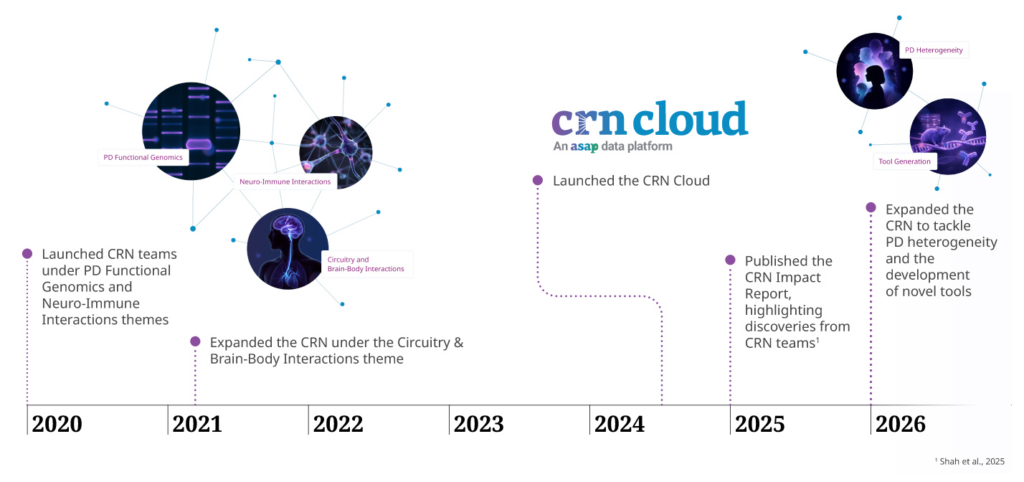
Timeline providing a high level overview of select Collaborative Research Network milestones.
For the first time, we have the capabilities, from high-resolution imaging to advanced computational modeling, to pose more complex questions about how factors like aging and the environment drive the unique trajectories of this disease.
Decoding Parkinson’s Complexity at the Source
To move toward a future of precision medicine, we must first master the science of heterogeneity (the diversity of the disease) at its origin. Our 26 new PD Heterogeneity teams are not looking for a quick fix; they are on a mission to map the “when, what, and how fast” of the disease at a molecular and circuitry level. By receiving up to $9 million over three years, these international teams have the freedom to take risks on bold hypotheses across six key themes:
Mapping Environmental Risk
Parkinson’s doesn’t exist in a vacuum. The four projects within this theme utilize epidemiological data, preclinical models, and AI-driven computational modeling to understand how environmental toxins, such as pesticides and air pollution, interact with genetic factors. By identifying these triggers, this research aims to uncover early-stage biomarkers and provide an evidence-based framework for shaping global regulatory policies on high-risk chemicals. Explore the team projects.
Understanding Co-Pathologies
The biological lines between Parkinson’s and other neurological conditions are often blurred. While alpha-synuclein is the hallmark of Parkinson’s disease, it frequently works alongside other “bad actors” like tau, amyloid-beta, and TDP-43 associated with conditions like Alzheimer’s or Frontal Temporal Dementia. The three projects within this theme explore Parkinson’s as part of a pathological spectrum, investigating how these co-occurring proteins create the symptom diversity we see in the clinic and identifying specific biological subtypes that require tailored treatment. Learn about the teams.
Exploring Age-Related Changes
Aging is the greatest risk factor for Parkinson’s, but we still don’t fully understand why. The five projects within this theme investigate how age-related changes to molecular and cellular processes contribute to the onset and features of the disease. By decoding how biological aging intersects with genetic risk, these teams aim to identify novel targets that can reverse or delay age-related vulnerabilities. Read more about the teams.
Revealing Brain Circuit Disruption
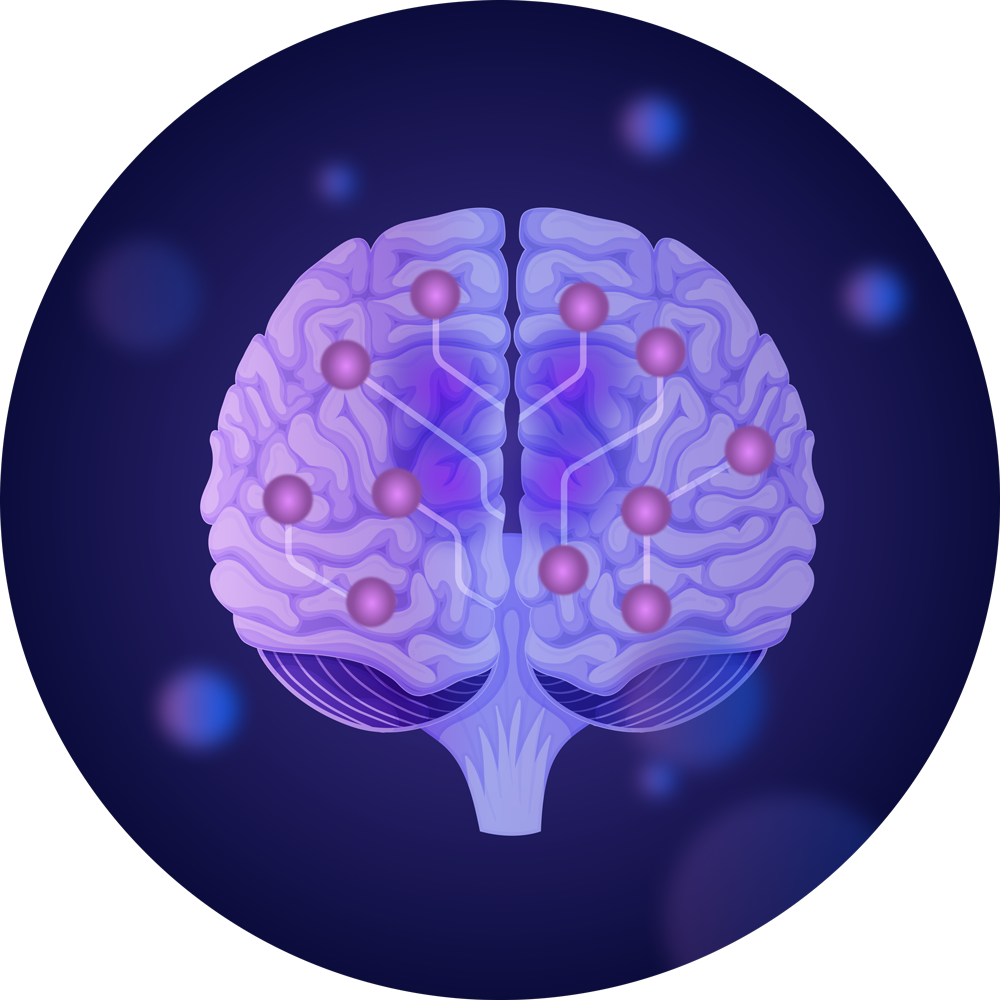
Why does one person lose sleep while another loses balance? The five projects within this theme utilize both human clinical data and preclinical models to understand how specific brain circuits contribute to symptoms, focusing heavily on non-motor challenges like sleep disturbances, cognitive dysfunction, and chronic pain. The goal is to provide a roadmap for precise, circuit-based interventions that can modulate brain network activity. Find out about the teams.
Studying the Brain’s Clearance Mechanisms
Think of this as the brain’s trash collection system. The five projects within this theme investigate why some brains fail to clear out toxic proteins, allowing them to accumulate and spread. By exploring disruptions in lysosomal health and lymphatic drainage, these teams aim to define the pathways that drive cellular waste removal. Identifying these “clogs” could reveal new druggable targets designed to enhance protein clearance and halt disease progression. Read about the teams.
Decoding Alpha-Synuclein Signatures
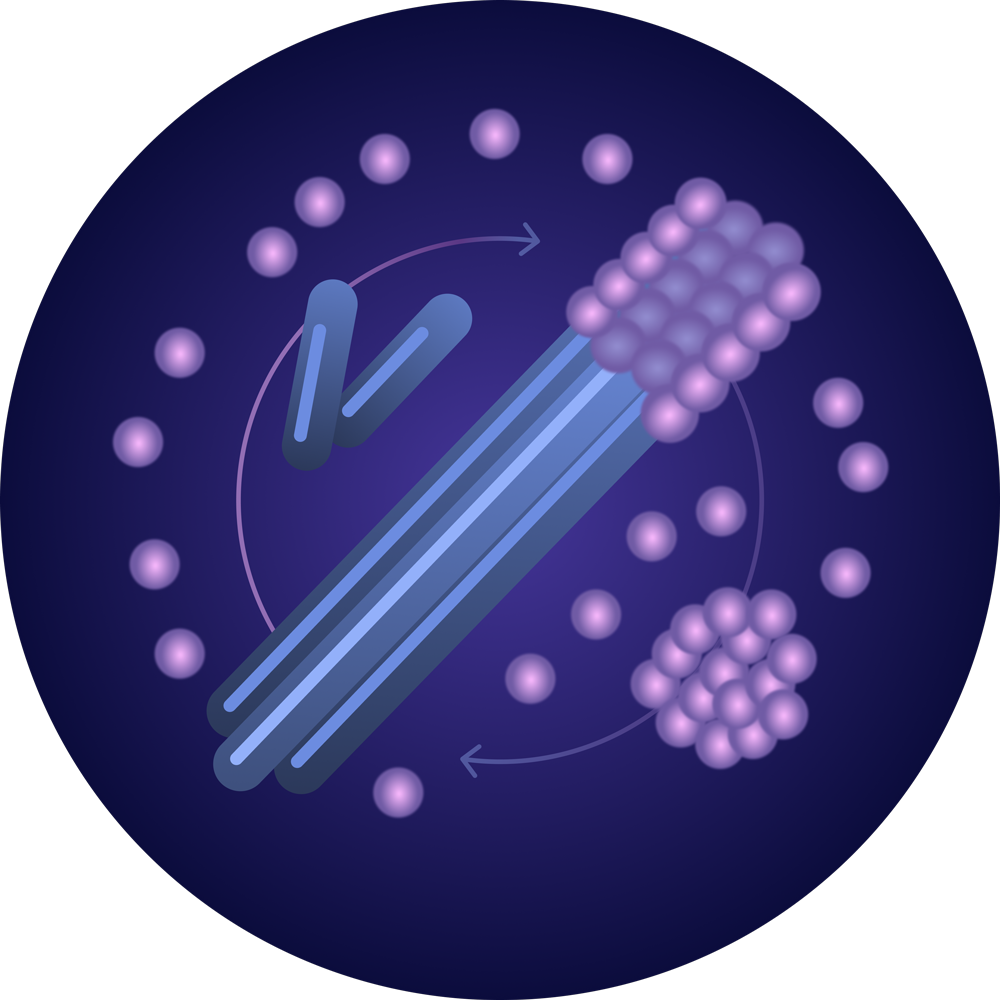
We know that alpha-synuclein isn’t a one-size-fits-all marker; it has different shapes and signatures. This is becoming even more critical with the emergence of the alpha-synuclein seeding amplification assay (SAA). The four projects within this theme focus on the structural and biochemical diversity of these protein aggregates across different tissues and genetic backgrounds. This comprehensive mapping will allow us to connect molecular signatures to clinical symptoms, identifying what the seed might be in the SAA and helping us predict disease subtypes and monitor the evolution of Parkinson’s in real time. Explore these new teams.
A Proven Model for Discovery
Isolated research is too slow for a community that needs answers now. ASAP’s CRN leverages a collaborative network to ensure every discovery is shared globally and the research outputs generated are accessible for others to leverage at time of preprint or sooner. We believe a breakthrough anywhere should be a breakthrough everywhere. It is no coincidence that ASAP is in our name.
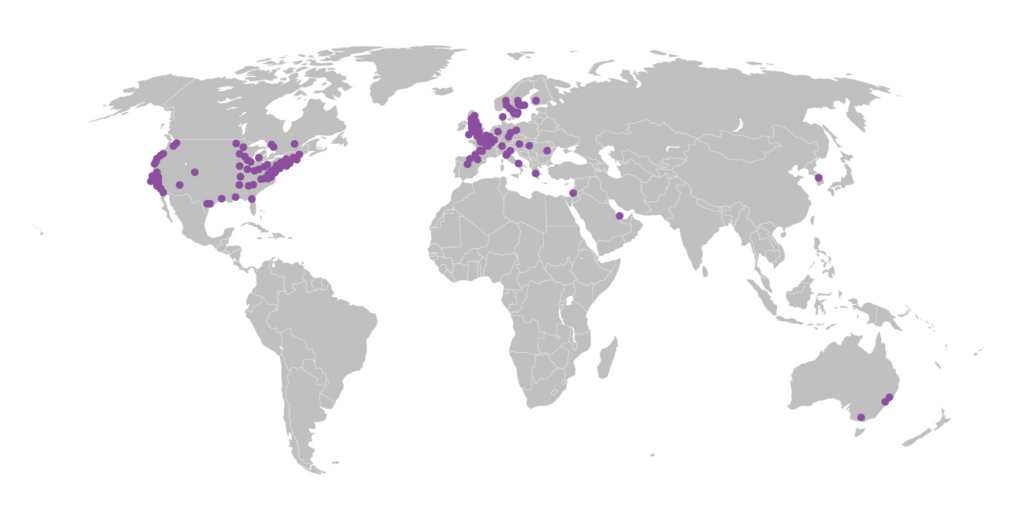
Map showing the locations of Collaborative Research Network investigators.
With this expansion, our network now encompasses nearly 400 investigators across 24 countries. We aren’t just funding team projects; we are cultivating a global ecosystem designed for rapid innovation and the seamless exchange of ideas. This collaborative infrastructure is the bridge that will carry unconventional, high-reward concepts out of the lab and into the life-changing diagnostics and precision therapies the world is waiting for.
To learn more about all teams, visit the CRN website.