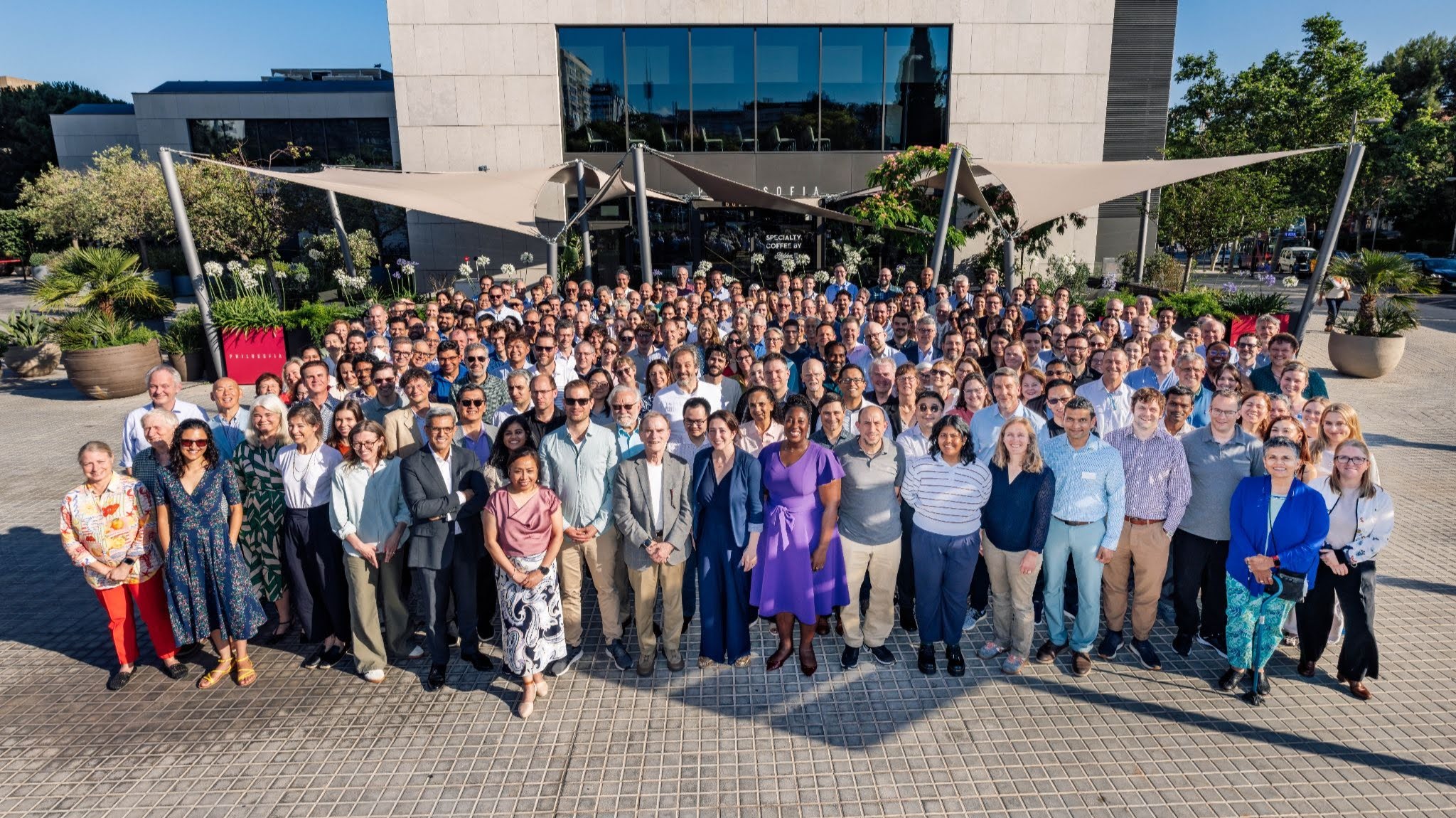
This year, the Collaborative Research Network (CRN) convened for its Annual Investigators Meeting in Barcelona, Spain, on June 15-18. The meeting brought together over 300 attendees, including established teams and newly funded investigators, under one roof for the first time. Since its inception, the CRN has poured its intellectual energy into understanding Parkinson’s disease (PD) through three overarching research themes: PD Functional Genomics, Neuro-Immune Interactions, and Circuitry and Brain-Body Interactions. The network has collectively made numerous strides in our knowledge of Parkinson’s disease through these lenses, so in 2026, the ASAP CRN expanded its network to include new areas of interest: PD Heterogeneity and Tool Generation.
CRN Resource Teams — including representatives from the Global Parkinson’s Genetics Program (GP2), Parkinson’s Precision Medicine Initiative (PPMI), Microbiome Analytics Core (MAC), CRN Cloud, AMP® PDRD, and more — joined the more than 50 CRN teams and representatives from other Parkinson’s disease research funders who were present at the meeting to challenge existing paradigms, showcase the promise of the latest research, and forge new connections. This integration of partners within and beyond the ASAP community showcases the intentional coordination across the Parkinson’s research landscape.

Participation at the 2026 CRN AIM compared to meetings in prior years.
Breaking Down Silos to Foster Cross-Disciplinary Collaboration
This year, 19 active CRN teams were joined by 32 new CRN teams that participated in their inaugural CRN meeting. The atmosphere buzzed with a new level of excitement and energy brought by the unique collaborative environment fostered by the CRN’s ethos.
The meeting intentionally created opportunities to facilitate cross-pollination of ideas, connect complementary expertise and resources, and enable cross-disciplinary collaboration. With 50% of attendees new to the network and 40% completely new to the Parkinson’s disease field, the gathering was marked by extensive cross-disciplinary collaboration.
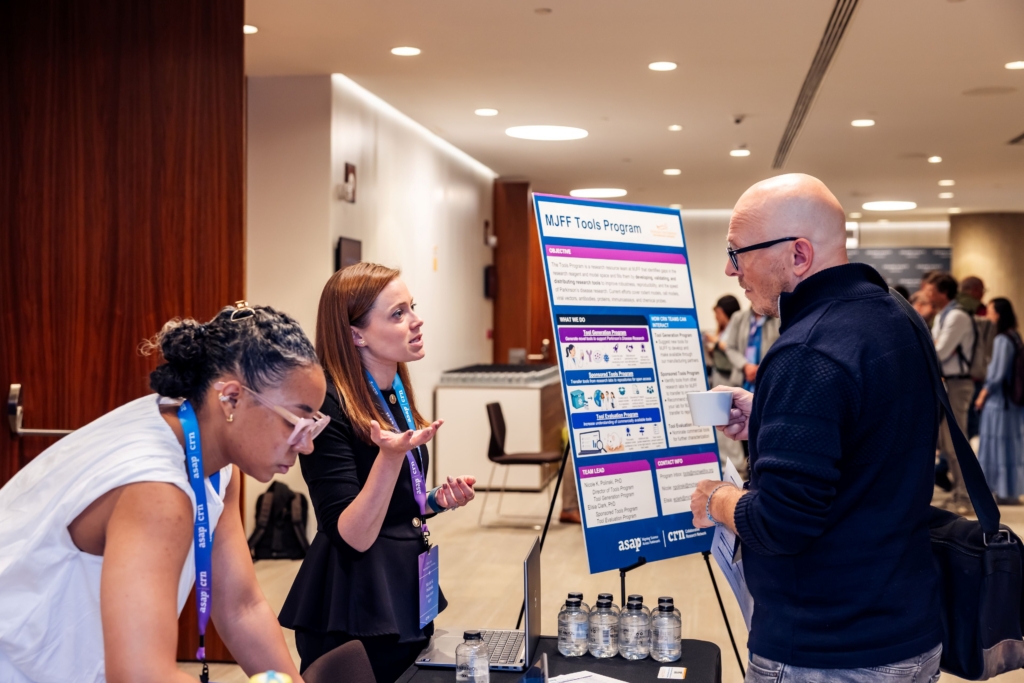
Attendees connect during a Resource Team Meet-and-Greet.
Theme-based parallel sessions on the first day of the meeting brought together researchers working on related scientific themes to align research efforts and foster collaboration across teams. Throughout the remainder of the meeting, parallel sessions focused on cross-cutting topics, connecting researchers across disciplines and areas of expertise, to break down silos and spark new collaborations. Resource Team Meet-and-Greets further connected research teams with the resources and expertise needed to advance their projects. Together, these activities created a collaborative environment that leveraged diverse perspectives and expertise, an essential approach for addressing Parkinson’s disease.
This collaborative mindset was reflected in the meeting survey results, with nearly 90% of respondents reporting that they identified new potential collaborations within the ASAP network, and approximately 40% of respondents finding some aspect of networking or making connections to be their favorite part of the meeting. Moreover, 69% of respondents believed the meeting reshaped their approach to their own ASAP research project, suggesting that the cross-disciplinary interactions at the meeting translate to research innovation as well.
Bridging Scientific Themes to Tackle the Complexity of Parkinson’s Disease
Increasingly, Parkinson’s disease is being recognized as a multifaceted disorder that affects and is influenced by numerous factors. The breadth of research represented at the CRN meeting reflects this complexity, spanning diverse scientific themes and approaches. The meeting brought these perspectives together, focusing not only on individual areas of research but also on the intersections between them, recognizing that understanding Parkinson’s multifaceted nature requires connecting insights across disciplines and levels of biology.
Each day began with a State of the Field address that provided a broader perspective on the current landscape of Parkinson’s disease research, highlighting key advances, persistent challenges, and critical knowledge gaps. These sessions provided a foundation for the cross-disciplinary discussions that followed and connected the CRN’s research to the broader questions facing the field. Throughout the meeting, four interconnected scientific themes served as lenses to explore these questions:
- Heterogeneity: An exploration of Parkinson’s disease heterogeneity from clinical phenotypes to molecular subtypes, including computational strategies for diagnosis and therapy.
- Synapse to System: A look at neural circuit adaptation, compensation, and resilience, and how these can be targeted for therapeutic interventions.
- Cellular Quality Control: Examination of how cells detect and respond to stress, including endolysosomal, mitochondrial, and proteasomal pathways.
- External Triggers: A review of the known and suspected external and downstream drivers of Parkinson’s disease progression, linking environmental exposure, biological mechanisms, and translational impact.
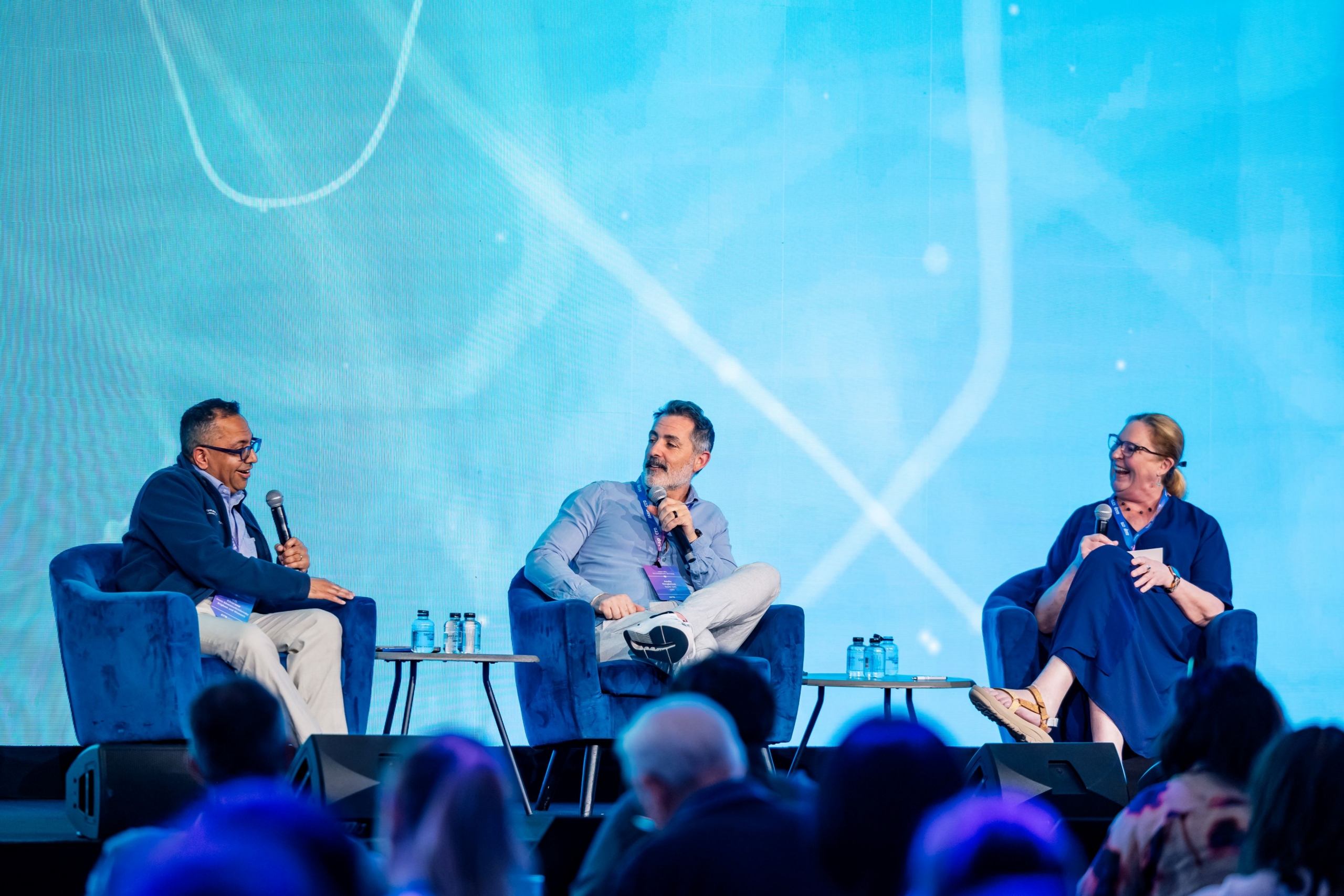
Panelists Vikram Khurana, MD, PhD, Andrew Singleton, PhD, and Laura Niedernhofer, MD, PhD, take the stage to challenge key assumptions during the debate session, “Parkinson’s: A Consequence of Aging or Time?”
Importantly, the meeting also turned toward the big unanswered questions in Parkinson’s disease that cannot be addressed from a single disciplinary perspective. Special debate sessions were designed to challenge prevailing assumptions and encourage researchers to reconsider established ideas. CRN researchers went head-to-head on two critical questions:
- Is Parkinson’s an inevitable consequence of age-related biology, or does it have unique molecular drivers?
- Is alpha-synuclein aggregation the initiating event in Parkinson’s disease, or is it a downstream byproduct of other molecular pathways?
Audience members voted before and after each debate, providing a real-time measure of how the discussion influenced their thinking. Notably, views shifted between pre- and post-session polls, demonstrating that these sessions challenged assumptions and prompted researchers to think differently. For example, the “Is Parkinson’s an inevitable consequence of age-related biology?” debate saw a 35-point jump in favor of the opposing side after the debate. CRN researchers’ willingness to change their beliefs based on new evidence underscores the value of bringing diverse scientific perspectives to complex questions in Parkinson’s disease.
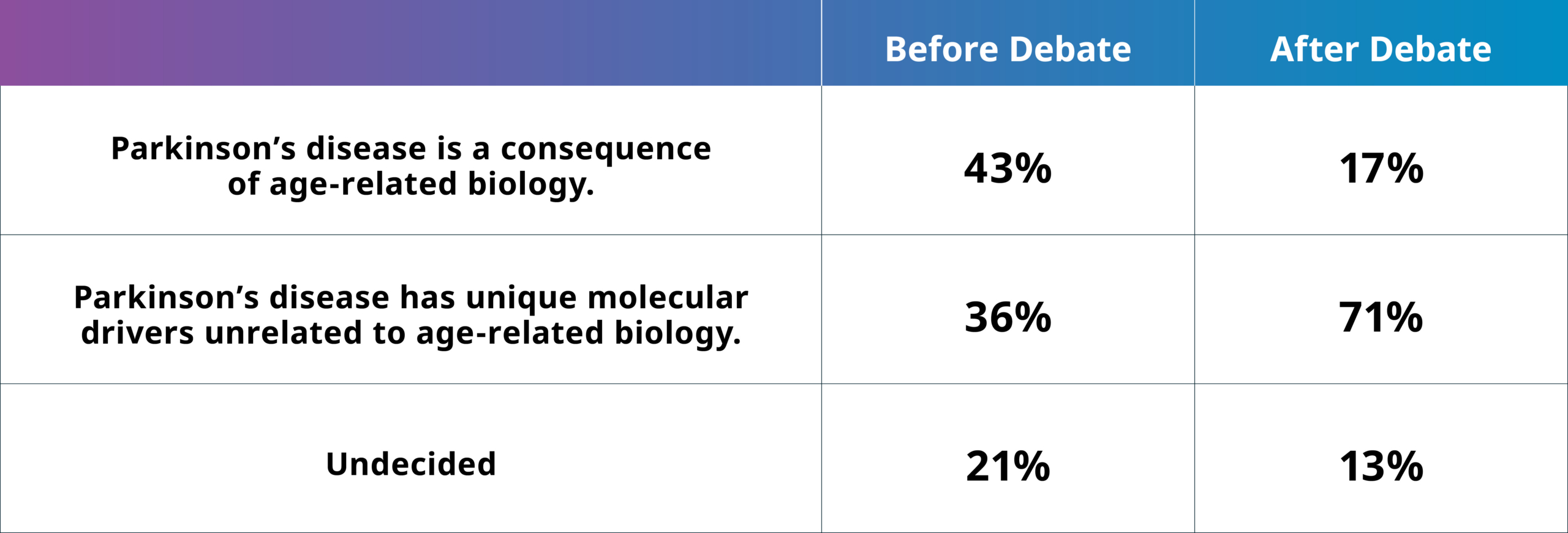
Audience opinion before and after the debate, “Is Parkinson’s an inevitable consequence of age-related biology, or does it have unique molecular drivers?”
Together, the State of the Field addresses, thematic sessions, and debates connect individual areas of research to larger questions about how Parkinson’s disease develops, progresses, and varies across individuals.
Centering the Patient Perspective
Translating basic science into meaningful patient impact is the core of ASAP’s mission. Throughout the week, scientists consistently anchored their highly technical work back to the lived human experience of Parkinson’s disease. Three patient advocates, at various points in their Parkinson’s disease journey, attended the meeting: Kevin Kwok, Manuel Marin, and Clare Webb. Each shared their journey, hopes, and call to action. Kevin Kwok shared his personal journey with Deep Brain Stimulation and reminded the network of the critical gap between temporary symptom control and a true biological cure. Clare Webb provided a unique dual perspective as both a physician and a patient with early-onset Parkinson’s disease. Manuel Marin shared his experience as a participant in PPMI and clinical trials, and his hope for future breakthroughs. These patient perspectives remind us why basic science matters and call us to approach Parkinson’s research with renewed momentum.
“Collaborate with focus and urgency! … Symptom control is not what I’m looking for—what I’m looking for is disease modification.” — Kevin Kwok

Patient advocates Kevin Kwok, Clare Webb, MD, and Manuel Marin share their personal experiences with Parkinson’s during a keynote address.
Looking Forward: What Happens Next?

Attendees network and exchange ideas during a social reception.
CRN teams are funded to tackle high-priority questions related to Parkinson’s disease as a network. While each team has its own project goals, the nature of the CRN encourages collaboration both within and across teams and research themes. Breakthroughs won’t happen in a vacuum. The CRN highlights that overcoming the field’s greatest obstacles requires radical, continuous collaboration between clinicians, basic science researchers, data scientists, and patients.
This work won’t stop in Barcelona. It continues with ongoing, year-round research collaborations, open data sharing, and resource mapping that will carry this momentum forward. With so many fresh perspectives now integrated into the pipeline, the road ahead is more promising than ever before.